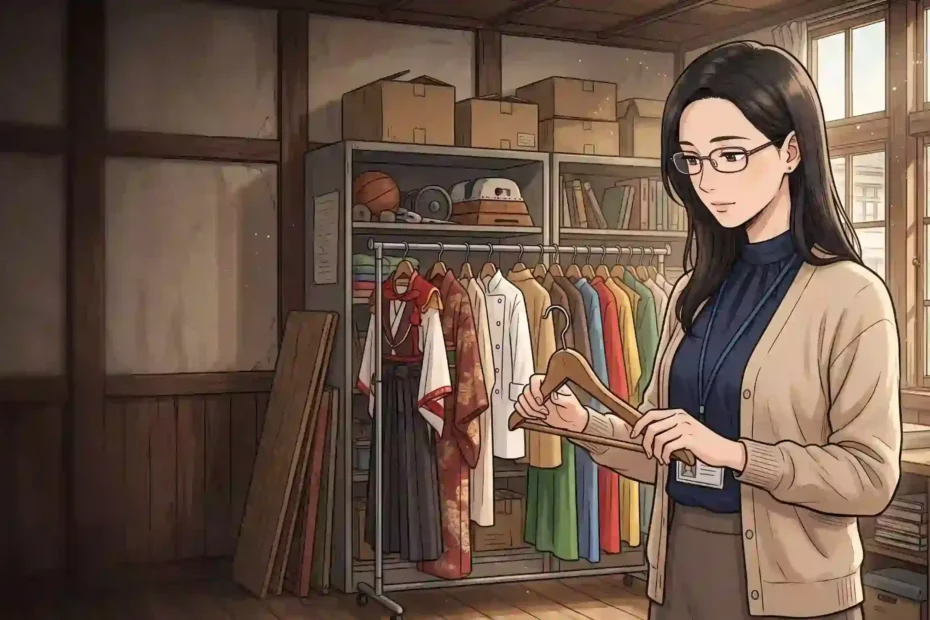
A quiet teacher, an unexpected discovery, and a private fascination with clothing set this comedy apart from a standard school-life story. Toki-Sensei wa Kigaetai follows Shisoya Toki, a reserved educator whose image at school does not tell the whole story. This guide explains the manga’s premise, creator, tone, themes, publication details, and audience fit, so readers can decide whether its mix of character comedy and ecchi situations suits them.
Quick answer: What is Toki-Sensei wa Kigaetai?
Toki-Sensei wa Kigaetai is a Japanese seinen manga by Toshinori Takayama. Its Japanese title is 時先生は着替えたい, and it is also known in English as Ms. Toki Wants to Change Clothes. The story centers on Shisoya Toki, a quiet teacher whose interest in clothes leads to comic, fashion- and costume-focused situations. The publisher describes it as a sexy, cute cosplay comedy; catalogues commonly classify it as seinen, comedy, school life, and ecchi.
The title translates approximately as “Teacher Toki Wants to Change Clothes.” English title renderings vary, so readers may encounter “Ms. Toki Wants to Change Clothes,” “Toki-sensei Wants to Change Clothes,” or similar wording. Searching with the romanized Japanese title and the Japanese title can help distinguish the series from unrelated results.
At a glance
| Detail | Information |
|---|---|
| Japanese title | 時先生は着替えたい |
| Romanized title | Toki-sensei wa Kigaetai |
| Common English title | Ms. Toki Wants to Change Clothes |
| Creator | Toshinori Takayama (高山としのり) |
| Publisher | Nihon Bungeisha |
| Japanese magazine/platform | Weekly Manga Goraku / Goraku Web, according to publisher and catalogue records |
| First serialization | 2022 |
| Format | Japanese manga; collected in paperback and digital editions in Japan |
| Main genres | Seinen, comedy, ecchi, school life, slice of life |
| Central character | Shisoya Toki, a reserved female teacher |
| Core hook | A composed teacher’s clothing-related interest drives awkward and playful comedy |
| Content note | Adult-leaning suggestive humor and costume-focused situations |
Publication status and volume counts can change. Check Nihon Bungeisha’s current catalogue for the latest Japanese release information rather than relying on older reader databases.
The premise: a reserved teacher and a surprising hobby
Shisoya Toki has a composed, quiet manner. People around her can read that reserve as coldness or unfriendliness, and the publisher’s synopsis notes that she has earned a “beautiful but unfortunate” reputation among students. That first impression forms the story’s comic contrast: the teacher who seems difficult to approach has a vivid private interest in clothes.
The publisher’s introductory description says Toki encounters a new pair of bloomers while sorting supplies in an old school building. The discovery sparks her curiosity about clothing and sets the comedy in motion. The point is not simply that she changes outfits; the setup lets the story play with the gap between public image and private enthusiasm.
In Toki-Sensei wa Kigaetai, clothing becomes the engine for scenes involving surprise, embarrassment, transformation, and performance. A costume can change how Toki carries herself, how others react, and how the ordinary school setting feels. The premise gives the artist a recurring way to create visual humor while keeping the lead character’s personality at the center.
Readers should expect suggestive comedy rather than a strictly wholesome classroom drama. The publisher markets the series with cosplay and erotic-comedy language, while manga catalogues commonly use the ecchi label. That distinction matters for choosing the title: its school backdrop is a setting for adult-oriented humor, not a promise of a conventional educational story.
Who created the manga?
Toshinori Takayama is credited as the creator of the manga. Nihon Bungeisha publishes the collected volumes in Japan, and the series is associated with the publisher’s Manga Goraku line and Goraku Web service. The publisher’s announcement for the first collected volume identifies Takayama as the author and provides the initial synopsis and release information.
For reliable bibliographic details, the publisher is the strongest source to consult. Retail listings and manga databases can help locate formats and reader-facing catalogue data, but they may lag behind current publication changes or use unofficial English title spellings. When two records disagree about a date or volume count, prefer the publisher’s current book page or official series listing.
This guide focuses on information that can be checked against publisher materials and established catalogue records. It does not claim inside knowledge of the author’s process, unpublished plans, or future plot developments. That boundary helps readers separate confirmed publication facts from speculation.
What genre is Toki-Sensei wa Kigaetai?
The most useful way to describe the manga is as a seinen comedy with ecchi and school-life elements. “Seinen” refers to a publication demographic and is not, by itself, a quality rating or a guarantee about an individual reader’s age. “Ecchi” commonly signals suggestive content; it does not necessarily mean explicit sexual material. The publisher’s own promotional wording also emphasizes cosplay, sexiness, and cuteness.
The manga’s ingredients work together in a specific way:
- Comedy: Toki’s serious exterior clashes with situations that expose her enthusiasm.
- Costume and fashion play: Clothes create visual changes and become the source of many jokes.
- School-life setting: Staff, students, school routines, and campus spaces provide the backdrop.
- Slice-of-life rhythm: The central premise can generate self-contained everyday episodes.
- Suggestive humor: Some jokes and transformations are designed for an adult-leaning audience.
The blend will appeal most to readers who enjoy character-led comedy and visual gags. Someone seeking a realistic account of teaching, a serious romance, or a strictly family-friendly school story may want to review the publisher’s sample pages and content presentation before buying.
Main character: Shisoya Toki
Toki is the organizing force of the series. Her quiet manner creates an outward persona that others can misunderstand. The story then uses her interest in clothing to reveal a more expressive, curious side. Instead of giving her a generic “secret hobby,” the series builds its recurring humor from a hobby that directly changes what the reader sees on the page.
That contrast gives the character a simple but effective comic pattern: a reserved person faces a situation that draws out a less guarded response. Her reactions, the context of the outfit, and other characters’ interpretations all contribute to the joke. The premise can also invite a gentle question about how people behave when they feel free to explore interests away from the expectations attached to their public role.
The title’s focus remains on Toki rather than on a large cast or an elaborate fantasy world. Secondary characters and school relationships add context, but a new reader can grasp the central appeal quickly: watch a composed teacher’s clothing interest collide with ordinary routines. Avoid expecting a deep ensemble drama unless later chapters demonstrate that direction.
Why clothes matter to the story
Clothing is more than decoration in this manga. It is a visual storytelling tool. A change of outfit can signal a shift in mood, create a disguise or performance, or make a familiar character look unexpectedly different. Because manga is a visual medium, those changes can deliver a joke before anyone says a word.
Costumes also make the premise flexible. A single fascination can lead to multiple situations without changing the basic setting: preparation, discovery, a public occasion, a misunderstanding, or a character’s reaction. That repeatable structure suits episodic comedy, while the lead’s personality provides continuity from one scenario to the next.
There is a useful distinction between fashion-focused storytelling and costume-focused comedy. Fashion stories often discuss design, identity, craft, or trends in detail. Here, publisher materials foreground cosplay and erotic comedy. Clothes matter chiefly because they trigger character reactions and comic situations, not because the series presents itself as a technical guide to garment construction.
Tone and reading experience
The likely reading experience is light, fast, and driven by visual contrast. The core joke is immediately understandable: a person with a reserved public image has a lively interest that can lead to conspicuous situations. Readers who like expressive character art, outfit changes, and playful embarrassment may find the hook appealing.
The tone is not neutral for every audience. The publisher’s own description signals sexy cosplay comedy, and database genre labels identify ecchi content. That makes it sensible to treat the title as adult-leaning entertainment and to use official previews to judge whether its humor and presentation are comfortable for you.
A reader approaching it as a school-life series should keep expectations calibrated. The school setting supplies the everyday framework, but the clothing-driven comedy is the defining feature. The teacher-and-student context may also raise questions for some readers about boundaries and framing; consider the publisher’s sample and your own preferences before choosing the series.
Is it suitable for every reader?
No single genre label can settle personal suitability. “Seinen” indicates a target demographic category, while “ecchi” warns that suggestive humor is part of the package. The publisher explicitly promotes the work as sexy and cosplay-focused. Those are useful signals, but they do not replace checking a sample edition or local age-rating information.
Use these questions as a quick guide:
- Are you comfortable with suggestive jokes and revealing costume themes?
- Do you enjoy comedy built around embarrassment, dress-up, and reactions?
- Are you looking for light entertainment rather than realistic education or serious romance?
- Do you prefer to preview a title before buying? If so, choose a legal publisher sample when available.
Parents and younger readers should not infer suitability from the word “school” in a description. Check the edition’s age guidance, publisher presentation, and sample pages. Retailers and regions can apply different rating systems, so confirm the details for the edition you plan to read.
Publication history and volumes
The series began serialization in 2022, according to Japanese catalogue records. Nihon Bungeisha later collected the chapters into volumes. The first collected volume was released in Japan on December 27, 2023, and the publisher’s catalogue records the second volume on September 19, 2024. Later volumes have appeared as the serialization continued.
Because this is an ongoing Japanese publication in the sources consulted, the number of volumes and the release status may have changed by the time you read this. Publication dates also vary by format: a chapter’s online appearance, a Japanese print book, a digital edition, and a translated edition are separate release events. Do not assume that a Japanese volume date means an English-language edition is available on the same day.
| Release detail | What readers should know |
|---|---|
| Serialization start | 2022, as shown in manga catalogue records |
| First Japanese collected volume | December 27, 2023, per publisher announcement/catalogue |
| Second Japanese collected volume | September 19, 2024, per Nihon Bungeisha catalogue |
| Later collection | The publisher has continued listing subsequent volumes; verify the current catalogue for the latest status |
| Translation availability | Availability depends on country and retailer; check official local listings |
The most dependable way to confirm the newest volume is to search Nihon Bungeisha’s official book catalogue using the Japanese title, 時先生は着替えたい. That search also helps avoid confusion created by slightly different romanizations.
How to read it legally
Start with the publisher’s official series or book listing. It can confirm the Japanese edition, format, ISBN, publication date, and whether a sample is available. If you want a digital copy, check the official retailers linked from the publisher’s catalogue or search for the title within established ebook stores in your country.
A few practical checks can save time:
- Search both Toki-sensei wa Kigaetai and 時先生は着替えたい.
- Confirm the credited creator is Toshinori Takayama.
- Check the publisher name, Nihon Bungeisha, and the edition language.
- Read the listing’s content notes and preview pages before purchasing.
- Verify whether the listing is a print book, ebook, chapter, or translated edition.
- Avoid sites that distribute scans without the publisher’s permission.
A legal edition supports the creator and publisher, and it is more likely to provide complete pages, correct ordering, and clear release information. If no translated edition is listed in your region, the Japanese edition may be the only official option currently available there. Availability can change, so check again rather than relying on old forum posts.
What makes the series distinctive?
The hook is easy to summarize but offers room for variation: a reserved teacher has a strong interest in clothes, and that interest repeatedly disrupts the image other people have of her. This gives the manga an immediately recognizable premise. Readers do not need a long mythology or complicated worldbuilding to understand why a new outfit or discovery could lead to a scene.
The contrast between public composure and private enthusiasm is a classic comedy device, but the clothing angle gives it a visual identity. Each costume can alter the silhouette, mood, and social context of a scene. The appeal therefore depends not only on dialogue but also on how Takayama stages the characters and their reactions.
The work’s clear genre signals are another point of distinction. The publisher does not present it as an understated literary drama; its promotional language openly highlights cosplay, sexiness, and cuteness. Readers can make a better choice because the intended flavor is visible from the description rather than hidden behind a misleading genre label.
Themes beneath the comedy
Although the series is primarily presented as comedy, the premise touches on ideas that readers can notice without treating the manga as a serious thesis. One is the difference between how a person appears and what they enjoy in private. Toki’s reserved demeanor does not explain her whole personality, and the story uses that mismatch to make her more than a single first impression.
Another theme is self-expression. Clothes can be functional, social, playful, or performative. When Toki’s interest takes center stage, dressing becomes a way to try on a mood and step outside the role others expect her to play. The manga approaches this idea through comedy, not through a detailed sociological argument, but the underlying contrast helps the premise feel character-based.
There is also a theme of embarrassment and audience. A private interest can feel harmless in one setting and awkward in another when other people notice it. The story uses that pressure for jokes. Readers may interpret the scenes differently depending on how they feel about public performance, workplace roles, and the line between personal expression and social expectations.
Strengths and possible drawbacks
Potential strengths
- A short, memorable premise that is easy to understand.
- A lead character whose public image contrasts with her private enthusiasm.
- Costume changes that provide strong visual comedy opportunities.
- A clear tone for readers who want light, suggestive entertainment.
- A school-life backdrop that creates familiar social situations.
Potential drawbacks
- The ecchi framing may not suit readers seeking all-ages comedy.
- Costume and embarrassment gags may feel repetitive to readers who prefer plot-heavy stories.
- Readers looking for a serious account of school life may find the premise too playful.
- The teacher-and-school context may not appeal to everyone.
- English title and availability information can vary across databases and markets.
These are not universal verdicts. They are practical expectations based on the publisher’s description and the series’ commonly listed genres. A sample chapter is the best test of whether the humor, art, and pacing work for you.
Who might enjoy it?
Toki-Sensei wa Kigaetai may suit readers who like character-centered manga, light comedy, cosplay themes, and expressive outfit-based gags. It can also work for someone who wants an episodic series with a clear central character and a premise that does not require extensive background knowledge.
It may be a poor fit for readers who want non-suggestive school comedy, detailed fashion instruction, a serious teacher drama, or a romance-first plot. The publisher’s description is unusually helpful here: it explicitly points toward cosplay and erotic comedy. Let that be a guide rather than assuming that the title is simply a gentle story about clothes.
How to evaluate a sample chapter
If you are undecided, read a legal preview and focus on the elements that shape the actual experience:
- Comedy style: Does the humor feel playful to you, or does the embarrassment-based framing fall flat?
- Visual presentation: Do you enjoy the character designs and the way outfits are drawn?
- Pacing: Does the setup-to-payoff rhythm keep your attention?
- Content comfort: Are the suggestive scenes within your personal boundaries?
- Character appeal: Does Toki’s contrast between reserve and enthusiasm interest you?
A sample is more useful than a rating alone. Scores vary by platform, reflect different audiences, and rarely explain which parts a reader liked or disliked. The first few pages will tell you more about the series’ humor and tone than a number can.
Common search confusion and title variants
Readers may see several English renderings because the Japanese title is transliterated and translated in different ways. “Toki-sensei wa Kigaetai” is the romanized title; “Ms. Toki Wants to Change Clothes” is a common English rendering. The original Japanese title is 時先生は着替えたい. Some databases omit the hyphen or use “Toki-san,” so title variation does not necessarily indicate a different manga.
The word “sensei” can mean teacher or instructor, and translations may handle the honorific differently. “Kigaetai” conveys wanting to change clothes. A title translation is therefore a helpful search clue, not proof that a particular edition has an official English release. Confirm the language and publisher on the actual product listing.
Reader checklist before you start
- Confirm you have the correct manga and creator.
- Decide whether ecchi and costume-focused humor fit your preferences.
- Check the edition language, format, and local age guidance.
- Preview the opening through an official source if available.
- Look at the publisher catalogue for current volume and release details.
- Keep Japanese and English title variants handy when searching.
These steps take little time and prevent common disappointments, especially when catalogue listings combine Japanese publication facts with unofficial translation status.
Frequently asked questions
1. What does Toki-Sensei wa Kigaetai mean?
It means roughly “Teacher Toki Wants to Change Clothes.” The title refers to the series’ central character and clothing-focused premise. English renderings vary, so the Japanese title 時先生は着替えたい can help identify the right listing.
2. Who wrote and illustrated Toki-Sensei wa Kigaetai?
Toshinori Takayama is credited as the creator. Nihon Bungeisha publishes the Japanese collected editions. The publisher’s official book listings are the best place to confirm edition-specific details.
3. What is the story about?
The manga follows Shisoya Toki, a quiet teacher whose interest in clothes leads to comic, costume-centered situations. A discovery in an old school building sparks the premise described by the publisher. The humor plays on the contrast between Toki’s reserved image and her enthusiasm.
4. Is Toki-Sensei wa Kigaetai an ecchi manga?
Yes, it is commonly categorized as ecchi, and the publisher promotes it with sexy cosplay-comedy language. Expect suggestive humor and costume-focused scenes. Check an official sample and the edition’s age guidance if you are unsure about its content.
5. Is the manga finished, and how many volumes are there?
The series has been listed as ongoing in Japanese catalogue records, but status and volume counts change. Check Nihon Bungeisha’s current catalogue for the latest information. Remember that chapter, print-volume, ebook, and translation schedules may differ.
6. Is there an official English version?
English-language availability depends on territory and can change. Do not assume that an English title used by a database means an official translation exists. Check the publisher’s catalogue and established retailers in your country, and verify the edition language before purchasing.
Conclusion: decide by the premise and the preview
Toki-Sensei wa Kigaetai has a focused, memorable idea: a reserved teacher’s fascination with clothes sparks visual comedy and suggestive costume situations. Toshinori Takayama’s series is best approached as adult-leaning seinen comedy, not as a conventional classroom drama or a fashion manual. The publisher’s description, genre labels, and an official sample together offer a clear way to judge whether its tone is right for you.
If the combination of character comedy, dress-up, and playful embarrassment sounds appealing, look up the Japanese title and confirm the edition through Nihon Bungeisha or a trusted bookseller. If it is not your style, a quick preview can save you a purchase. Share which costume-comedy or character-led manga you would recommend next, and help other readers find a series that fits their tastes.