What Is Kigachiakuta? The Full Gachiakuta Guide for New and Long-Time Fans
 By Mariam Nazir
14 min read
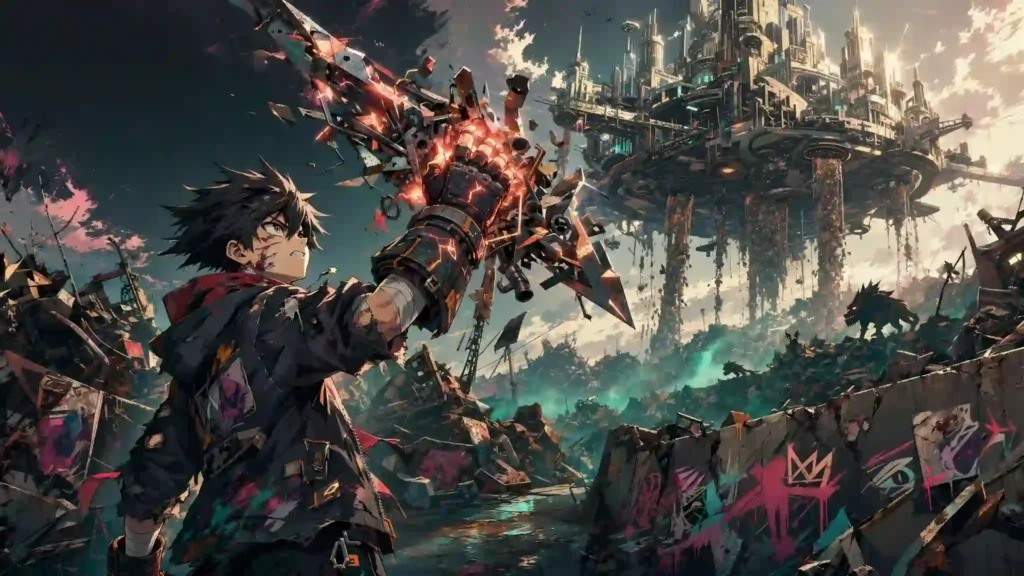
You typed Kigachiakuta into a search bar, and the results feel messy. One page says manga, another says anime, and most pages explain very little. That gap wastes your time and leaves you with half-answers. This guide fixes that in one place, with the story, the cast, the reading order, and every release update in plain words.
What Does Kigachiakuta Mean and Why Do People Search It?
Kigachiakuta is a spelling variant of Gachiakuta (ガチアクタ), the manga written and drawn by Kei Urana. The official title carries no extra “ki” at the front. Readers add it by mistake because the coined word blends two Japanese ideas into one unusual shape.
The name breaks into two parts. Gachi means serious, real, or legit. Akuta means trash or rubbish. Put them together and the title reads close to “legit trash.” That pun fits a story about people who turn thrown-away objects into weapons.
Searchers land on this page for four main reasons:
- They entered the name from memory after hearing it pronounced in a video.
- They saw a clip on social media and guessed the spelling.
- They tried to type Gachiakuta and hit the wrong keys.
- They mixed the title with “Kiga,” a common syllable in other Japanese titles.
Every one of those searches points to the same series. Kei Urana’s story runs in Kodansha’s Weekly Shōnen Magazine and started on February 16, 2022. The anime debuted on Crunchyroll in 2025 and is available in English from Kodansha USA.
One detail helps the spelling stick. Say the name out loud as “Gah-chee-ah-koo-tah.” The hard “g” at the front carries the whole word. Once you hear it, the misspelling stops looking like a mystery and starts looking like a simple typo.
Who Created Kigachiakuta and What Shaped the Story?
Graffiti artist Hideyoshi Andou creates the street art graphics, while Kei Urana writes and illustrates the series. That pairing explains the look of the world. Walls, tunnels, and city surfaces carry tags and murals, and the art treats spray paint as a language of its own.
Urana learned pacing and panel flow while working as an assistant to Atsushi Ohkubo on Fire Force. That training shows in the fight scenes. Panels stay clean, movement reads fast, and the camera lands where the action needs it.
A small childhood moment built the power system. Urana once broke a pen and kept using it. A broken hanger owned by her grandmother stayed in her memory too. Those objects held feeling, and that feeling became Anima, the energy that powers the series.
The early wins came quickly. The manga took the Global Special Prize in the comics category at the 2022 Next Manga Awards. In May 2026 it won the 50th Kodansha Manga Award in the shōnen category after nominations in 2023 and 2024.
What Is the Story of Gachiakuta About?
The story revolves around Rudo Surebrec, a young man who resides beneath a floating metropolis in a slum. Society throws its trash down to his home, and he sorts through it for a living. One night he gets blamed for a murder he did not commit, and the city drops him into the Pit as punishment.
The Pit is a death sentence on paper. It is a dumping ground for the worst waste, guarded by beasts and filled with poison air. Rudo survives because anger gives him something to hold onto, and that anger wakes a power inside him.
Enjin finds him in the waste and offers a deal. Join the Cleaners, learn to fight, and earn a path back home. Rudo accepts, and the story turns into a long climb toward the truth about his father, the city above, and the system that throws people away.
The core question never gets lost. Who decides what counts as trash? Rudo answers that question with his fists, and the answer grows sharper in every arc.
Where Does the Story Take Place? The ground, the pit, and the sphere
The world has four clear layers, and each one shapes the people who live there.
The Sphere floats above everything. Wealthy citizens live up top, and they never see the waste they create. The city runs on the belief that some people matter more than others.
The Slums sit on the underside of the Sphere. Tribesfolk live there, sorting the city’s garbage for a living. Rudo grows up in this layer, and the story never lets you forget it.
The Pit is a hole in the world. The city uses it as an execution site by dropping people into it. Trash Beasts roam the bottom, and the air burns your lungs.
The Ground is the wasteland below. It holds mountains of garbage, ruined towns, and No Man’s Lands with their own rules. Places like Penta, Tori, and Canvas Town sit on this layer, and each one carries a different culture.
The Ground and the Sphere are divided by the Border. It marks the line between the people who throw things away and the people who receive them.
This layout does real work in the story. Every location pushes the theme forward, and every climb upward raises the cost of the journey.
What Is Anima and How Do Vital Instruments Work?
Anima is the feeling that builds inside an object people love and use. A worn tool, a favorite jacket, a trusted pair of boots, all of them collect this energy over time. The stronger the attachment, the stronger the Anima.
Givers are people who can pull that energy out. They touch an object and wake its power. When a Giver bonds with a treasured item, that item becomes a Vital Instrument, also called a Jinki.
Vital Instruments take the shape of the object’s purpose. A weapon stays a weapon, a tool stays a tool, and a piece of clothing can become armor. The bond decides the form, and the user’s will decides the strength.
The Watchman Series sits above everything else. These ancient instruments carry the Watchman emblem and hold far more power than normal Jinki. Rudo’s gloves, Amo’s boots, Zodyl’s coat, and Gountess’s necklace all belong to this group.
| Vital Instrument | Owner | Object and Ability |
|---|---|---|
| 3R | Rudo Surebrec | Gloves that pull full Anima from up to three discarded items at once, then reshape the junk into heavy weapons before it crumbles |
| Umbreaker | Enjin | A giant umbrella that blocks hits, slams enemies, and controls space in close combat |
| The Ripper | Zanka Nijiku | A blade-driven polearm built for fast, slicing attacks |
| Lovely Assistaff | Riyo Reaper | A long staff that extends and strikes with reach and precision |
| Mankira | Jabber Wonger | Twin blades that cut in tight, brutal arcs |
| Connect | Gountess | A necklace from the Watchman Series with powers still unfolding in the story |
Rudo’s gloves carry the cleanest idea in the series. Reduce, reuse, recycle. He takes what others threw away and gives it one last, fierce purpose.
Who Are the Main Characters?
Rudo Surebrec is the lead. He starts angry, hurt, and alone, and he grows into someone who protects the people around him. His gloves mirror his growth, since they only work when he values what he touches. Aoi Ichikawa voices him in Japanese, and Bryson Baugus voices him in English.
Enjin recruits Rudo and leads Team Akuta. He hides real pain behind jokes and easy confidence, and his umbrella hides more power than it shows. Katsuyuki Konishi voices him in Japanese, and Christopher Wehkamp voices him in English.
Zanka Nijiku fights with precision and cares about rules. He clashes with Rudo early and becomes a steady ally later. Yoshitsugu Matsuoka and Corey Wilder voice him.
Riyo Reaper brings speed and nerve to the team. She acts before she thinks and lands hits that bigger fighters miss. Yumiri Hanamori and Katie Caruso voice her.
Jabber Wonger fights for the Raiders and loves a good brawl. He becomes one of the most quoted characters in the fandom. Yuuki Shin and Zeno Robinson voice him.
Regto is Rudo’s adoptive father, and his absence drives the early plot. Toshiyuki Morikawa and John Burgmeier voice him.
Arkha Corvus leads the Cleaners and holds the group together. Zodyl Typhon leads the Raiders and carries his own Watchman coat. The English dub cast keeps the sharp banter intact for viewers who avoid subtitles.
Who Are the Cleaners, the Raiders, and the Hell Guards?
The Cleaners form the heart of the story. They collect dangerous trash, protect the slums, and answer to boss Arkha Corvus. Teams like Team Akuta, Team Eager, and Team Child give the group its structure, and Supporters handle the work behind the front line.
The Raiders work against the Cleaners and follow Zodyl Typhon. Members like Jabber Wonger, Bundus, Noerde, and Fu push the conflict forward. Their goals stay unclear for a long stretch, and that fog makes them more threatening.
The Hell Guards keep order with their own code. Choka Nijiku leads them, and their methods test the Cleaners on rules and loyalty.
Spellcasters add a different flavor. Remlin in Canvas Town shows how other communities solve problems with powers that share no rules with the Cleaners.
These groups turn a simple revenge story into a full society. Each faction holds a piece of the truth about the Sphere, and Rudo needs all of them to reach the top.
How Does the Anime Compare With the Manga?
The anime launched on July 6, 2025, and ran 24 episodes across two back-to-back cours. It ended on December 21, 2025 with Episode 24, titled “Field Trip.” Bones Film produced it with director Fumihiko Suganuma, series composition by Hiroshi Seko, character design by Satoshi Ishino, and music by Taku Iwasaki.
The opening theme “HUGs” by Paledusk set the tone for the season. Taku Iwasaki’s score pushed the fight scenes and the quiet scenes in equal measure, and the win for Best Background Art at the 10th Crunchyroll Anime Awards showed how much care went into the world.
The adaptation followed the manga closely, and it cut very little. Season 1 covered Chapters 1 through 87 and reached into the start of Chapter 88, which covers the opening of the Heritage Mural arc.
Animation added value in the fight scenes. Motion gave the Vital Instruments weight, and colour turned the Ground into a place you could almost smell. The trade-off is pacing, since the manga moves faster and some readers prefer that rhythm.
Content ratings differ by format. The anime carries a TV-MA rating, and the Kodansha USA edition is marked 16 and up. Both versions keep the violence and the rough language, so parents should check before handing either one to a younger reader.
| Format | Release Window | Coverage | Best For |
|---|---|---|---|
| Manga (Japanese) | February 2022 to now | 174 chapters, 19 volumes as of July 2026 | Readers who want the newest plot turns first |
| Manga (English) | January 2024 to now | Volume 13 due November 24, 2026 | Collectors and shelf readers |
| Anime Season 1 | July 6 to December 21, 2025 | Episodes 1 to 24, Chapters 1 to 88 | Newcomers who want motion and voice acting |
| Stage play | May 22 to June 7, 2026 | Core early arcs in stage form | Fans who want a live performance |
| Video game | In development | Survival action role-playing game from Com2uS | Players who want to fight inside the world |
Where Should You Start Reading Kigachiakuta After Season 1?
Start at Chapter 88 if you finished Season 1. The finale ends with the Heritage Mural arc opening, and Chapter 88 picks up right there. You lose nothing by jumping in at that point.
Chapter 88 sits at the start of Volume 11 in English. The volume arrived on July 21, 2026, so the handoff from screen to page stays smooth.
Check the last scene before you jump. Episode 24 closes with a post-credits tease about Tamsy Caines, and the full reveal lands in Chapter 92, titled “Tamsy’s Day Off.” Readers who skip ahead miss a well-built payoff.
Two small habits make the switch easier:
- Read one chapter past the anime ending to reset your sense of pacing.
- Keep the character names handy, since the manga uses the full cast faster than the show did.
Jabber fans get their reward in this stretch. The Raiders arc grows sharper after Chapter 90, and the fight choreography on the page hits hard.
What Is the Full Chapter and Volume Timeline?
The series built a steady release rhythm, and a few gaps changed the schedule.
- February 16, 2022: Serialization begins in Weekly Shōnen Magazine.
- 2022: The manga wins the Global Special Prize in the comics category at the Next Manga Awards.
- January 16, 2024: Kodansha USA releases English Volume 1.
- July 6, 2025: Anime Season 1 premieres.
- December 21, 2025: Season 1 ends with Episode 24, and Season 2 gets announced the same day.
- May 2026: The series wins the 50th Kodansha Manga Award in the shōnen category.
- May 22 to June 7, 2026: The stage play runs in Tokyo and Kyoto.
- July 2026: Season 2 gets a first-look trailer, and the manga reaches 19 volumes in Japan.
- Early August 2026: Chapter 173 closes the Doll Festival arc, and the manga takes a research break.
- November 11, 2026: Chapter 174 returns and resumes serialization.
- November 24, 2026: English Volume 13 arrives.
Volume 20 has no release date yet in Japan. Expect an announcement after the current arc finds its footing.
Why Did the Series Win So Many Awards?
The awards came from two directions: reader support and craft.
The 50th Kodansha Manga Award in the shōnen category arrived in May 2026. That prize follows nominations in 2023 and 2024, so the win marked a climb rather than a lucky jump.
The 10th Crunchyroll Anime Awards in 2026 brought three wins for the series. It took Best New Series, Best Background Art, and Best Character Design for Satoshi Ishino. It also earned nominations for Anime of the Year, Best Action, Best Animation, Best Director for Fumihiko Suganuma, Best Main Character for Rudo, Best Supporting Character for Enjin, Best Score for Taku Iwasaki, and Best Opening Sequence for “HUGs” by Paledusk.
Sales numbers back the hype. The series appeared on Circana BookScan monthly top-20 charts and on the New York Times Graphic Books and Manga bestseller list from February through July 2026. Oricon’s 2026 report put the sales pace above 400,000 copies in its tracking window.
Critical attention followed too. The Encyclopedia of Science Fiction praised the series for its world-building, which gave the story a foothold beyond anime fan sites.
What Comes Next? Season 2, Stage Play, and Game News
Season 2 is in active production at Bones Film. The studio announced it on December 21, 2025, right after the Season 1 finale. A first-look trailer arrived in July 2026 at Anime Expo, and the premiere date still sits unannounced.
The stage play already finished its run. Director Go Ueki and writer Watashiomu built the show around the early arcs. Hikaru Imamaki played Rudo, Yuta Tachibana played Enjin, Yu Fukuzawa played Zanka, Sena played Riyo, and Ryosei Tanaka played Jabber.
The show ran from May 22 to May 31, 2026 at the Shinagawa Prince Hotel Stellar Ball in Tokyo, then from June 5 to June 7, 2026 at the ROHM Theatre Kyoto South Hall.
A survival action role-playing game is in development at Com2uS. It targets PlayStation 5, Xbox, and PC. No launch window exists yet, and the studio has shared little beyond the genre and platforms.
Anime fans also got a broadcast route. The English dub landed on Adult Swim’s Toonami on October 18, 2026, which put the series in front of a late-night audience that grew up on this style of action show.
How Can New Readers Enjoy the Story Without Spoilers?
A few simple choices keep the story fresh.
Pick one lane first. Watch Season 1 or read Volume 1, but do not juggle both in the same week. Two versions at once splits your attention and dulls the twists.
Use a chapter marker as your cutoff. Readers who want the anime surprise should stop at Chapter 87. Readers who want the newest plot turns should catch up to Chapter 174.
Avoid the big spoiler zone until you pass Chapter 92. That chapter changes how you read one major character, and knowing it early weakens the arc.
Keep a name list nearby. The cast grows fast, and the manga expects you to remember Teams, factions, and Jinki without reminders.
Trust the tone. The series mixes rage with warmth, and the best chapters let both feelings sit side by side.
Frequently Asked Questions
Is Kigachiakuta the same as Gachiakuta?
Yes. Kigachiakuta is a misspelling of Gachiakuta, the manga by Kei Urana. The extra “ki” at the front comes from memory and typing errors. Both terms point to the same series, the same characters, and the same anime.
Is Kigachiakuta finished or still running?
Kigachiakuta is still running. The manga returned with Chapter 174 on November 11, 2026 after a research break. Season 2 of the anime is in production, so the story has plenty of room left.
Where should I start with Kigachiakuta if I only watch anime?
Start with Kigachiakuta Season 1 and watch all 24 episodes. Then read Chapter 88 to continue the story. That path keeps the plot in order and avoids gaps.
What is Anima in Kigachiakuta?
In Kigachiakuta, Anima is the feeling that builds inside objects people love. Givers pull that energy out, and the object becomes a Vital Instrument. Rudo’s gloves, called 3R, work exactly that way.
How many volumes of Kigachiakuta are out?
Kigachiakuta has 19 volumes in Japan as of July 2026. English readers reached Volume 12 in September 2026, and Volume 13 arrives on November 24, 2026. Volume 20 has no date yet.
Is Kigachiakuta good for teen readers?
Kigachiakuta carries a TV-MA rating for the anime and a 16-and-up mark for the manga. The fights are brutal, the language is rough, and the themes are dark. Teens who handle mature action stories will be fine, and younger readers should wait.
Start With One Chapter and See Where the Story Takes You
You now hold the full picture. You know why the name looks odd, what the story does, who fights whom, and where the series stands in November 2026. Nothing stands between you and the first page.
Pick your entry point today and act on it. Watch Episode 1, read Volume 1, or open Chapter 88 if you already finished the anime. Set a small goal, like three chapters a night, and let the world pull you in.
Then join the conversation. Post your favourite Vital Instrument, defend your favourite Cleaner, and hand this guide to the friend who still types the name with a stray “ki.” The series rewards people who pay attention, and it rewards fans who bring others along.